Since last autumn there have been new developments in Turkey regarding the arch-old Kurdish issue. Some observers are talking about a new and lasting conflict resolution process. However the chronic lack of a free press in Turkey as well as the total opacity of the ongoing process call for caution. One should note that this is far from being a classical conflict resolution process as one of the parties, the Kurds’ leader Ocalan is “negotiating” under duress, being still jailed. NUPEL (www.nupel.tv) has prepared the attached 10 Q&A to help the foreign press and interested parties to better grasp the ongoing process.
*
1) Who initiated the political initiative known as the Turkish State’s ‘Terror-Free Turkey’ and PKK leader Ocalan’s ‘Peace and Democratic Society’ project, when, how, and why?
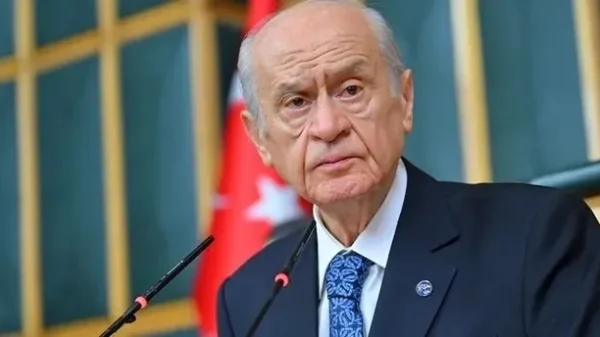
The new process was initiated by MHP (Nationalist Movement Party, Erdogan’s ally, far-right, 47 MPs out of 592 seats) leader Devlet Bahceli who unexpectedly shook hands with co-chairs Tuncer Bakırhan and Tülay Hatimoğulları of the DEM (People’s Equality and Democracy Party, Kurds and left-wing, 56 seats) during the opening ceremony of the new legislative year at the Turkish Grand National Assembly on 1 October 2024.
Bahceli, who had previously been fiercely critical of the DEM Party and Kurdish politicians, calling them an extension of a ‘terrorist organisation’, i.e. PKK, and calling for the party to be shut down, cited Erdogan’s speech in Parliament as the motive for his move.
In his speech, Erdogan brought up the conflicts that began with Hamas’ attack on Israel on 7 October 2023 and gradually spread throughout the Middle East, drew attention to ‘Israel’s aggressive stance in the region’ and, based on this, said that Turkey needed to ‘keep its internal front strong’ in the new period.
In official statements, the new process was justified by claims that Israel’s regional policies would pose a threat to Turkey, that the Kurds would spiral out of control, and that a Kurdistan under Israeli protection would be established in the Middle East.
2) How did the Kurdish front respond to this initiative, and on what grounds?
The first official response came from the DEM Party. On 2 October, the Deputy Chair Gulistan Kocyigit, said that Bahceli’s words were ‘meaningful and important.’ ‘It is a paradox to want peace in the world but not want peace in your own country. In that sense, it is necessary to say “peace in the country, peace in the world, peace in the region” and to take the necessary steps to achieve this,’ she said.
The PKK (Kurdistan Worker’s Party, founded in 1978, today the largest Kurdish political and military organisation) initially rejected this initiative and said that Erdogan and Bahceli were ‘up to something new’. Speaking on Medya Haber TV on 7 october, Ms. Bese Hozat, Co-chair of the Executive Council of the KCK (Kurdistan Communities Union, an umbrella organisation founded under the leadership of the PKK) said that for the initiative to be serious, the isolation in Imrali ( Special prison on the island in the sea of Marmara where Ocalan is detained since 1999) must be lifted and Ocalan must be visited and consulted. She conveyed the message that they would support the initiative if these conditions were met.
3) What did the Erdogan regime do after the October 2024 initiative? What did it not do?
Speaking at the AKP Parliamentary group on 9 October, President Erdogan expressed his support for Bahceli’s initiative. Erdogan said, ‘Considering the atmosphere in our region, we need to talk more, reach more agreements, and expand the ground for dialogue, and we hope to resolve the country’s issues with the broadest possible consensus in the new period.’
Bahceli also brought the issue back to the agenda on 22 October in the MHP Parliamentary Group and said, ‘If the isolation of the terrorist leader is lifted, let him come and speak at the DEM Party group meeting in the Grand National Assembly and proclaim that terrorism has completely ended and the organisation has been dissolved.’ In response, he stated that ‘legal regulations should be made to allow him to benefit from the right to hope.’
On 24 October, Ocalan’s nephew, DEM Party Urfa MP Omer Ocalan, travelled to İmralı Island and held a meeting with Ocalan. Ocalan sent the message, ‘If the conditions are right, I have the theoretical and practical power to shift this process from a basis of conflict and violence to a legal and political basis.’
After nearly five months of discussions and meetings on İmralı, PKK leader Ocalan published a ‘Call for Peace and a Democratic Society’ on 27 February 2025. Ocalan called for the dissolution of the PKK’s organisational structure and an end to armed struggle. Ocalan’s call was announced to the public at a hotel in Istanbul. The demand for ‘legal and political regulations for dissolution and disarmament,’ which was not included in the call, was later added verbally to the statement.
The KCK announced its support for this call in a statement on 1 March 2025. On 12 May, a new statement from the PKK announced that the party congress had been held between 5 and 7 May, that the organisational structure had been dissolved, and that the armed struggle had been ended. The PKK statement emphasised that legal and political arrangements were necessary to implement the decisions taken at the congress and that Ocalan had been given the initiative to manage the process.
At this stage, since the Erdogan regime has not made any legal and political move, the PKK is not taking practical steps either. There is a deadlock in the process, or a ‘setback’ as DEM Party members put it, and it is not known how this will be overcome.
Deputy President Cevdet Yilmaz (11 June 2025-TV 100) stated, ‘First of all, we need to see that the decision to disband and lay down arms has been implemented on the ground. Our relevant institutions will closely monitor and follow this.’ As can be understood from these words, the Erdogan regime does not consider the decisions taken to be sufficient and wants them to be implemented.
Helin Umit, a PKK leader (11 June-Anf), said that they would not take any practical steps without the state taking action.
Umit said, “Bahceli’s words, “Let them come and do politics, let Ocalan benefit from the right to hope, let him speak in Parliament,” remain unfulfilled. The process began with these words, but it did not find a response from the state. It remained Bahceli’s call. There is still no progress on the right to hope. We have taken the necessary steps, but it is not a situation where everything will happen according to our wishes. We are not the only ones who determine everything. We are faced with a state and its will and policies. If there is no transformation on the part of the state, it will not be possible to put these decisions into practice.”
4) How are the Turkish and Kurdish media and public opinion assessing developments?
There are two media outlets at opposite ends of the spectrum, and two public opinions with very different approaches to the process, understandings of it, and interpretations of it. The Turkish media, and especially the pro-government media, is framing the process as the ‘surrender and elimination’ of the PKK, publishing news and commentary to that effect. The pro-government media claims that the goal of a ‘terror-free Turkey’ will be achieved through unilateral steps taken by the Kurdish side. Since the process began, it has not even considered the suggestion from Kurdish politicians to ‘change your language.’ It continues to use terms such as ‘terrorist organisation’ or ‘terrorist leader’ that it has used in the past. The Turkish public has also largely adopted this approach. Although the public seems pleased that the war is ending, it does not see this as a political solution, ‘bargaining’ or ‘negotiation.’ It cannot be said that the public is enthusiastic about granting fundamental rights to the Kurds.
The Kurdish media, on the other hand, largely evaluates developments in terms of ‘peace and solution.’ It writes that a new solution process has begun with Ocalan, that the Turkish state was forced to go to Imrali due to concerns caused by regional developments, and that a shared future with the Kurds is being discussed and debated there. On the other hand, due to the distrust of the state and the government, a cautious approach to publishing prevails in the Kurdish media, with criticism and reactions focused on the AKP (Justice and Development Party, Erdogan’s political Islamist/neo-liberal party, which holds 272 seats) wing of the People’s Alliance (the electoral alliance formed by Erdogan and Bahceli’s party with two smaller partners). In the media close to the Kurdish Political Movement, assessments that the AKP is not in favour of a solution and is stalling the process are frequently raised.
Although the Kurdish public is in favour of ending the war and 71 per cent support the process according to surveys, they do not seem very hopeful about the current situation. It is observed that the Kurdish public is not actively participating in the process for many reasons, including not only the past and present practices of the state and the government, but also the disappointment caused by Ocalan’s call, the inadequacy and recklessness of the DEM Party in managing the process, the discussion of the consequences rather than the causes of the problem, and the fact that the basic demands of the Kurds are not on the agenda.
On the other hand, Kurds who believe that the gains made in Rojava (the autonomous region under Kurdish administration in north-eastern Syria) will be preserved with the new process are concerned about the Turkish state’s insistence on recognising the autonomous administration in Rojava and integrating the SDG (Syrian Democratic Forces, a military organisation of approximately 100,000 people led by the Kurds) into a new Syrian army centred on HTS (Heyet Tahrir-ul Sam, a radical Islamist group currently in power in Damascus).
The Kurds have suffered greatly at the hands of the Erdogan regime in particular over the past 10 years. They have paid a heavy price in the north (Turkey), south (Iraq) and west (Rojava). Cities have been razed to the ground, and serious crimes against humanity have been committed in the occupied cities of Afrin, Serekaniye and Girê Spi (Tel Abyad) in Rojava. It seems unlikely that the political will behind these actions will suddenly change and start working in the Kurds’ favour. The people are taking a more careful, cautious and anxious approach to politics, based on their historical memory and common sense.
5) What are the expectations of the regime and the PKK from this initiative?
The regime’s goal is clear, and it expresses it in all its nakedness. The regime wants the elimination of the PKK and the realisation of its goal of a ‘terror-free Turkey.’ In connection with this, it aims to make the Kurds a component and extension of the regime. It wants to make the Kurds in the region submit to Turkey-centred regimes, bring them under control, and manage them in line with its own internal and external goals. The regime is sending the message that the Kurds will have a place in the system to the extent that they submit, and will receive tolerance and assistance to the extent that they are loyal to the regime.
The PKK, on the other hand, is trying to end its nearly 50-year struggle with a political solution and make a new start for a new era in which democratic politics will come to the fore. Furthermore, in this process, in which the guns have fallen silent and unilateral steps have been taken, as a result of the negotiations conducted through Imrali, although there has been no fundamental change in Turkey’s policy towards Rojava, there has been a softening and flexibility in finding a middle ground. The autonomous administration, proceeding from the assumption that the changing balances in Syria after 8 December could be detrimental to itself, is sending the message that it will meet some of Turkey’s demands, as demonstrated by its positive response to Ocalan’s call and the decisions taken by the congress.
However, at this stage, Turkey does not consider these sufficient and insists on the implementation of the steps it has demanded. However, there is no guarantee that Turkey will not put forward new conditions or impositions after unilateral practical steps are taken. Mutual distrust cannot be overcome.
The PKK is waiting for the Turkish state to create the political and legal groundwork for the process. Following the PKK’s dissolution and its declaration that it has renounced armed struggle, issues such as when, how and where the tens of thousands of guerrillas and militiamen can be integrated into society, and what the political and legal status of PKK leaders will be in the future, are not being taken into account by the state, despite the Kurds’ demands.
Another negative aspect of developments is the lack of transparency and the extremely limited number of actors involved in the issue.
6) How do other political parties represented in the Turkish Parliament, particularly the main opposition party CHP, assess the initiative?
The CHP’s policy on the Kurdish issue, described as ‘open, clear and courageous’ following Ozgur Ozel’s appointment as party leader, is having a positive impact on the Kurds. Özel’s support for the process, his proposal for a solution in Parliament, and especially his support for education in the mother tongue have won the sympathy of the Kurdish masses.
The CHP certainly supports the process and a peaceful solution, but it also draws attention to the government’s calculations to use this for its political agenda and to change the agenda. It states that Erdogan wants to be re-elected and consolidate his regime by drafting a new constitution.
On the other hand, it is observed that all parties except the nationalist İYİ Party (29 MPs) and the anti-Kurdish and anti-refugee Zafer Party support the process to varying degrees for one reason or another. The general trend indicates that the initiative has been positively received. Far-right nationalist Kemalists, however, oppose both the AKP and the Kurds, and therefore view the developments as ‘a game of American imperialism’ and ‘the division of Turkey.’
7) What are the fundamental issues of contention in the Kurdish question in Turkey? What does the state say, and what does the Kurdish side demand?
The Kurds are fighting for their national democratic rights in Turkey. Today, their fundamental demands are that the collective and individual identity of the Kurds be clearly recorded and guaranteed in the Constitution.
The PKK and its affiliates, which set out some 40 years ago to establish an Independent United Kurdistan, are now demanding education in their mother tongue and democratic autonomy. They want the obstacles to the use of Kurdish as a language of education to be removed and local administrations to be granted autonomy from the central government in many areas.
Ankara governments have rejected mother-tongue education since 1923. They state that Kurdish press, publications and cultural production are possible, but they prevent the use of Kurdish on the grounds of ‘politicisation.’ They indicate that Kurdish can only be used within the limits set by the state.
On the other hand, Ankara considers local autonomy to be ‘the first step towards division’ and rejects it. Today, far from strengthening local administrations, according to Erdogan’s Municipalities Plan, which has been reported in the press, elected mayors will be reduced to a symbolic level.
8) How did the reconciliation/peace initiatives between the Turkish state and the Kurdish Political Movement in the recent past end?
The PKK’s armed struggle began in 1984. Reconciliation efforts between the Turkish state and the Kurdish Political Movement began in 1993. The search for reconciliation during Turgut Ozal’s presidency ended shortly after his death, and the process evolved from peace talks to all-out war.
Over the course of 32 years, numerous talks were held between the parties. The most significant of these were the talks held in Oslo, which began in 2010. In 2013, the initiative officially named the ‘Peace Process’ was both more transparent and multi-stakeholder compared to today’s efforts. However, both initiatives failed to yield results due to the regime’s negative stance.
The Turkish state occasionally sat down at the negotiating table with the Kurdish Political Movement due to regional or global circumstances. However, it did not produce results because it sought to gain time and stall rather than find a solution, and because it discussed the issue of armed struggle rather than political negotiations with the Kurds.
The state viewed the Kurdish issue solely as a security issue and did not address its political, economic, and cultural dimensions.
In 2025, for the first time and perhaps again due to a change in the circumstances, the issue of disarmament, which should have been addressed last, was addressed first. The Kurdish side also approved this with congress decisions, and in fact, the state has little excuse left, but the possibility of a solution still seems weak. Observers note that external dynamics will be more effective this time, but they also remind us that the possibility of history repeating itself should not be dismissed.
9) How was this initiative received by the Kurds living in Syria, Iraq and Iran?
The initiative was welcomed by the Kurds of Iraq, Iran and Syria. It also found widespread support. The Kurds of Iraq and Syria in particular supported the process from the outset. Rojava politicians, civil society organisations, and opinion leaders frequently made statements of support for the process. The same was true in Iraqi Kurdistan. In fact, it is not surprising that the most support for the process came from these areas, as the Turkish state has been punishing both Iraqi and Syrian Kurds for years under the pretext of the PKK.
Turkey, which frequently carries out drone assassinations in Rojava, destroys living areas with tank and howitzer fire, and expels Kurds from their settlements, has killed more than 500 civilians in Iraqi Kurdistan in the last ten years alone. Hundreds of villages have been emptied, and agricultural lands and forested areas have been destroyed. In Syria, around 500 civilians were killed and 167,000 Kurds were displaced.
Therefore, with the expectation that the war will end and Turkey will cease its attacks, the support given to the process in these regions is at a high level. In contrast, despite the PKK’s congress decisions, the Turkish army’s attacks on guerrilla areas continue in June 2025. The HPG (People’s Defence Forces, guerrilla and militia units under the PKK’s control) is sharing information about guerrillas who have lost their lives in the attacks with the public. In Rojava, there is a calm before the storm. It is unclear which direction the process will take, and it appears that all eyes are on a possible “Iran-American” conflict.
The Turkish army’s renewed bombing of PKK positions and civilian settlements in northern Iraq in mid-June caused concern among both the PKK and Iraqi Kurds. On the other hand, the Iranian Kurdish organisation PJAK announced that although it generally supports the initiative, it will not respond to Ankara’s demand to lay down its arms.
10) What is the stance of Washington, Moscow, the EU, Paris, London, Berlin and Tel Aviv on this initiative?
The United States, Russia, the European Union, France, Germany and the United Kingdom have expressed their support for the initiative in official statements. While the United States considers the initiative an ‘opportunity’ for resolving the issue, the European Union, particularly Germany and France, did not fail to call on Turkey to ‘take action for a political solution.’ The issue was also raised at the United Nations Security Council’s special session on Iraq on 9 June (2025). In a presentation made on behalf of South Korea, which is not a permanent member of the Council, it was stated that the PKK’s decision to lay down its arms was positive for regional stability.
It appears that Israel is closely monitoring the process. Israeli officials occasionally send warm messages to the Kurds, apparently in response to the Erdogan regime’s closeness to Hamas. Israeli Foreign Minister Gideon Sa’ar declared the Kurds to be Israel’s ‘natural ally.’ Saying that ‘the Kurds are a great nation, one of the great nations without political independence,’ Sa’ar used the phrase ‘the Kurds are victims of pressure from Turkey and Iran’ and called for ‘Israel to strengthen its ties with the Kurds, both politically and in terms of security.’
Israel is concerned about how the new process will affect Syria and the region. It is worried that Turkey’s growing influence in Syria and the region will have negative consequences for its own interests, but it is still refraining from openly opposing Bahceli’s initiative.
(END)